01Drivers
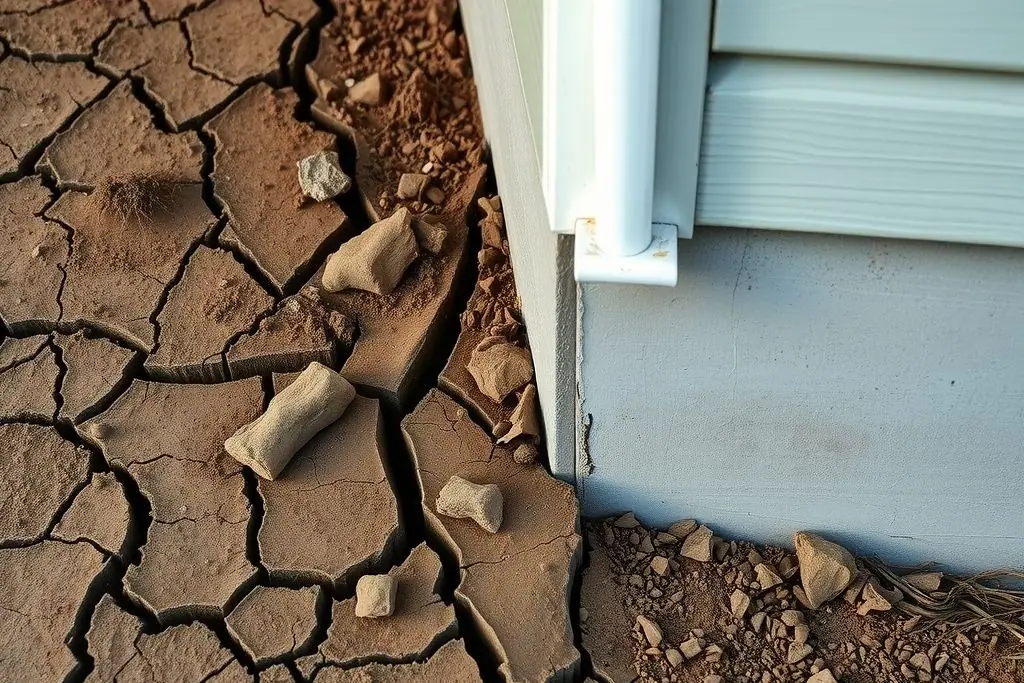
Four things that move foundations
| Driver | What happens | Typical signs |
|---|---|---|
| Expansive (shrink-swell) clay | Soil swells in the rainy season and shrinks in summer | Cracks that open and close seasonally, sticking doors that come and go |
| Concentrated water | Downspouts and grading soak one side of the house | Movement on the wet side, efflorescence, damp crawlspace |
| Trees | Roots draw moisture from soil near the house | Settlement on the side nearest a large tree, worse in late summer |
| Slopes | Soil creeps or slides downhill, especially after long storms | Cracks widening downhill, leaning walls, yard cracks |
02Look up your lot
How to check your parcel
- Soil: open the USDA Web Soil Survey, define your lot, and read the soil unit and its shrink-swell rating.
- Hazards: enter your address in the California Geological Survey's EQ Zapp to see mapped landslide and liquefaction zones.
- History: USGS Bulletin 1388 tied most damaging Contra Costa County landslides of 1950–1971 to ancient landslide deposits and long storms (USGS).
- Records: ask the city or County for any past permits, soil reports or grading files on the property.
Maps describe areas, not your exact foundation. A geotechnical engineer turns them into a site-specific answer.
03Water first
Fix the water before the foundation
Extend downspouts into solid pipe that discharges away from the house, regrade soil so it falls away from the foundation, fix leaking irrigation and pipes, and keep crawlspace vents clear. For French drains, catch basins and hillside drainage, see Walnut Creek Yard Drainage. Then reassess cracks through a full season before deciding on structural work.
04Next steps
When it is more than water
If cracks keep widening after drainage is fixed, or the house is on a slope, move on to an evaluation: symptom table, who to call, hillside repairs.
05Questions
Soil questions
How do I find out what soil is under my house?
Use the USDA's Web Soil Survey: draw an area of interest around your lot and check the soil map unit and its shrink-swell (linear extensibility) rating. Survey maps are general; a geotechnical report is the site-specific answer.
Can trees damage a foundation?
Large trees close to a house can dry the soil under one side in summer and add to settlement on clay. Many cities in this area protect native oaks, so talk to an arborist and check permit rules before removing a tree.
Will fixing drainage stop foundation movement?
Often it is the first and cheapest step, and sometimes all that is needed for seasonal heave or minor settlement. Active settlement or a moving slope usually needs structural work as well.
Sources · read October 4, 2026